
Hero Karizma XMR: A New Era of Excellence
The launch of the Karizma XMR is a momentous occasion, evoking personal stories from many in the auto media. This speaks volumes about the legacy of the original Karizma, a true icon in Indian motorcycling. For many, including myself, it was the first geared motorcycle, leaving lasting impressions of its grandeur, plush ride, and impressive low-end torque. Now, the question looms: how much of this esteemed lineage lives on in the brand-new XMR?
This isn't just a new bike for Hero; it's a paradigm shift. The XMR boasts Hero's inaugural liquid-cooled, DOHC engine, a steel trellis frame, and dual-channel ABS. It's not just about functionality; Hero has nailed the sportbike design, striking a harmonious balance between sportiness and comfort.
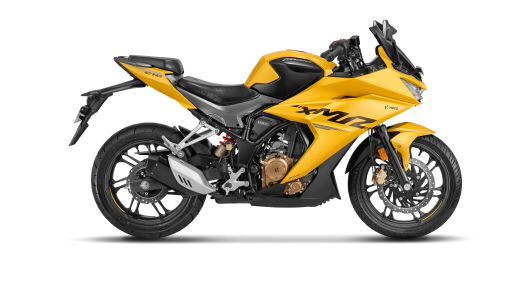
The XMR's proportions are just right, exuding a head-turning presence without overwhelming. The sleek fairing panels, striking tail, and vibrant yellow finish contribute to its allure. Despite its sporty appearance, the XMR surprises when you actually take it for a ride.

The riding position strikes a pleasant balance - not as upright as a typical street naked, but akin to the Bajaj Pulsar RS200. With a seat height of 810mm, it caters to most average-sized riders. However, the elevated rear seat may lead to some amusing moments for shorter passengers. This balance of style and comfort sets a high standard for bikes of this genre.

The suspension system handles rough terrain admirably, sparing your wrists and back from unnecessary strain. While it's not as soft as the classic Karizma, it retains a degree of plushness in most conditions. Only when faced with severe potholes does the front fork show a tendency to bottom out, and it doesn't take excessive speed to encounter this.

In terms of handling, the baseline chassis impresses. The XMR offers the right mix of agility for navigating traffic, although it doesn't have the featherlight feel of the R15. Weighing in at 163.5kg, it's on par with the KTM RC 200 and Bajaj Pulsar RS200, maintaining stability and confidence, even on bumpy roads.
While it shares characteristics with the Pulsar RS200 and Gixxer SF 250, it's not as razor-focused as the R15 or RC. The rear shock feels a tad soft under aggressive cornering, but this might be adjusted out of the factory. This marks a significant departure from the original Karizma, which lacked precision in such situations. The new XMR is more than up to the task.

The engine is a world apart from its predecessor, prioritizing top-end performance. It maintains composure at lower revs, offering a smooth throttle response. However, the real excitement kicks in around 7,000rpm, reminiscent of the rush seen in KTM bikes. Hero aimed for peak power and torque in the sub-220cc category, resulting in this exhilarating character. The exhaust note evolves from a subdued hum at low revs to an invigorating rasp above 7,000rpm, akin to the thrill of a KTM.
The six-speed gearbox is notably crisper, with a clutch action that feels light. While the slip assist clutch is a welcome addition, aggressive downshifts can unsettle the ABS system. The front brake, a 300mm disc, is sufficient but not exceptionally sharp. These aspects underscore that, despite its sporty appearance, the XMR excels as a daily rider.

Liquid-cooled bikes often generate heat in traffic, but the XMR handles this well. While some warmth is felt around the thighs, there's no uncomfortable blast of hot air. Vibrations are present but well-controlled, not posing a significant issue.
The XMR shines in the city, thanks to its smooth low-end responses, flexible nature, and well-chosen gear ratios. Although we couldn't test its performance beyond 100kph, Hero assures a top speed of 140-150kph.
In terms of features, the XMR impresses. The LED projector headlamp, with its ambient light sensor, provides ample illumination. The LCD display is clear, informative, and includes Bluetooth-enabled features like turn-by-turn navigation. Practical touches, like hazard lights and a smartly-placed USB port, enhance the experience. Noteworthy is the height-adjustable windscreen, a unique feature for showcasing.

While some cost-cutting is evident in the swingarm and telescopic fork, it translates to an attractive price point. At Rs 1.73 lakh, ex-showroom, the Karizma XMR offers remarkable value, competing favorably with higher-priced models. Its real contender, the Yamaha R15, is outshone by this offering, making it a compelling choice for many.
In conclusion, the Karizma name on this bike may raise eyebrows, as it marks a departure from its predecessor in style, ergonomics, and category. The engine, in particular, offers a distinct riding experience. Yet, this new XMR is a vastly improved machine, targeting a younger audience and redefining what a sub-250cc motorcycle can be. It's an exciting time for enthusiasts in search of a fully-faired, high-performance ride.



Social Plugin